

What makes Cambodian beef loc lac so appealing? It’s the contrast between savoury beef, fresh accompaniments and a bright, peppery lift. If Khmer dish names feel unfamiliar, you’re not alone. Loc lac can vary from one cook or restaurant to another, and that variety is part of the pleasure.
This guide covers the dish’s characteristic flavours and serving styles, plus what to notice when a plate arrives: the beef, the freshness alongside it and the seasoning that brings each bite together. You’ll also find a local place to enjoy it in West Melbourne.
At ANGKOR Cambodian Flavours, Beef Loc Lac is served as part of a dine-in menu inspired by Chef Neri’s Cambodian family heritage. Whether it’s your first taste of Khmer food or a familiar favourite, come curious. Here’s what makes loc lac distinctive, why versions differ and how to enjoy a plate.
Key Takeaways
- Discover what gives cambodian beef loc lac its savoury, peppery character and how citrus can brighten the flavour.
- See how beef cuts, seasoning and accompaniments can differ between recipes, without treating one version as the only way.
- Use a simple tasting sequence to explore the dish. Lettuce wrapping and dipping are optional ways to enjoy versions that include them.
- Enjoy Beef Loc Lac as part of a dine-in Khmer meal at ANGKOR Cambodian Flavours in West Melbourne.
What Is Cambodian Beef Loc Lac, and What Makes It Distinctive?
Cambodian beef loc lac is a savoury beef dish known for peppery warmth and a bright citrus note. That’s a useful starting point, but it doesn’t mean there’s only one correct recipe. Beef sits at the centre of the plate, while fresh, tangy accompaniments can add contrast and lift.
Expect a balance rather than one dominant flavour: savoury richness, peppery warmth and a fresh, lime-like edge. The cut of beef, seasoning and accompaniments can vary from one plate to another, so the same dish name doesn’t always mean an identical experience.
How does loc lac differ from other pepper beef dishes?
Loc lac belongs to Cambodian cooking and is enjoyed in its own right, rather than simply as another name for pepper beef. English-language menus and recipes may also spell it lok lak. The spelling can change while the dish’s Cambodian identity remains clear.
Some diners may recognise similarities to Vietnamese shaking beef. Shaking beef, also known as Bò lúc lắc or Lok Lak, is a popular dish in both Vietnamese and Cambodian cuisine. The comparison can help set expectations, but it doesn’t mean every version shares the same recipe, preparation or cultural story. Focus on the flavours and accompaniments in the dish you’re enjoying.
What flavours should first-time diners expect?
Start with the broad flavour picture: savoury beef, pepper warmth and citrus brightness. Pepper can bring a fragrant, lingering warmth, while lime-like acidity cuts through the richness and refreshes the palate. Together, these flavours make each mouthful feel rounded, not simply hot or salty.
The balance can change between preparations. One plate may be more pepper-forward, while another may lean towards a brighter, tangier note. “Peppery” doesn’t automatically mean chilli-hot, either. Take a small first bite and notice what comes through before adding or combining accompaniments.
Approach cambodian beef loc lac as a dish with a recognisable flavour character, not a fixed checklist of ingredients. Look for seasoned beef paired with elements that add freshness or contrast, then try them together. You don’t need to know Khmer food already to enjoy the interplay. Let the first bite guide you and give the different parts of the plate room to speak.
Cambodian Beef Loc Lac Flavours: Beef, Pepper and Lime in Balance
A useful way to understand cambodian beef loc lac is to notice how its flavours work together. Savoury beef brings depth, pepper adds warmth and fragrance, and citrus offers a clean, tangy lift. Pepper warms the savoury beef, while citrus brightens it with a fresh, tangy counterpoint. This is a flavour guide, not a fixed recipe.
Think of the balance as a set of contrasts. Pepper can linger after a bite, while citrus may make the next mouthful feel lighter. Sauces and aromatics can add more layers, from savoury seasoning to fresh, sharp notes. Their ingredients and intensity vary across recipes, so treat them as possible combinations rather than a checklist every plate must follow.
What does Kampot pepper add to loc lac?
Kampot pepper is Cambodian pepper associated with the Kampot region. In recipes that use it, pepper can contribute fragrant warmth that complements the beef rather than simply making the dish hot. Some recipes specify Kampot pepper, but it isn’t a universal requirement for loc lac. Pepper type and strength can differ, so notice whether it complements the beef or takes centre stage.
Why do lime and dipping sauce matter?
A citrus-led dip, when served, gives diners a way to add sharpness to savoury beef one bite at a time. Lime’s tang can cut through richness and make pepper’s warmth seem brighter. Dipping is one way to serve loc lac, not a rule for every plate. Treat any dip or dressing as part of that version’s balance.
Aromatics and sauces can also shape how the flavour unfolds. Garlic appears in some recipes, while other seasonings may deepen the savoury taste or lend gentle sweetness. When tasting loc lac, try the beef first, then sample a little of each accompanying element. Notice whether it adds freshness, savouriness or extra pepper. This simple comparison helps you appreciate the whole combination without needing to identify every ingredient.
There’s no need to chase the strongest pepper or sharpest lime. A satisfying balance lets each note come through: the beef remains savoury, pepper gives warmth and citrus brings lift. Enjoy the dish as part of a dine-in Khmer meal at ANGKOR in West Melbourne.
Comparing Cambodian Beef Loc Lac: What Changes Between Recipes and Plates?
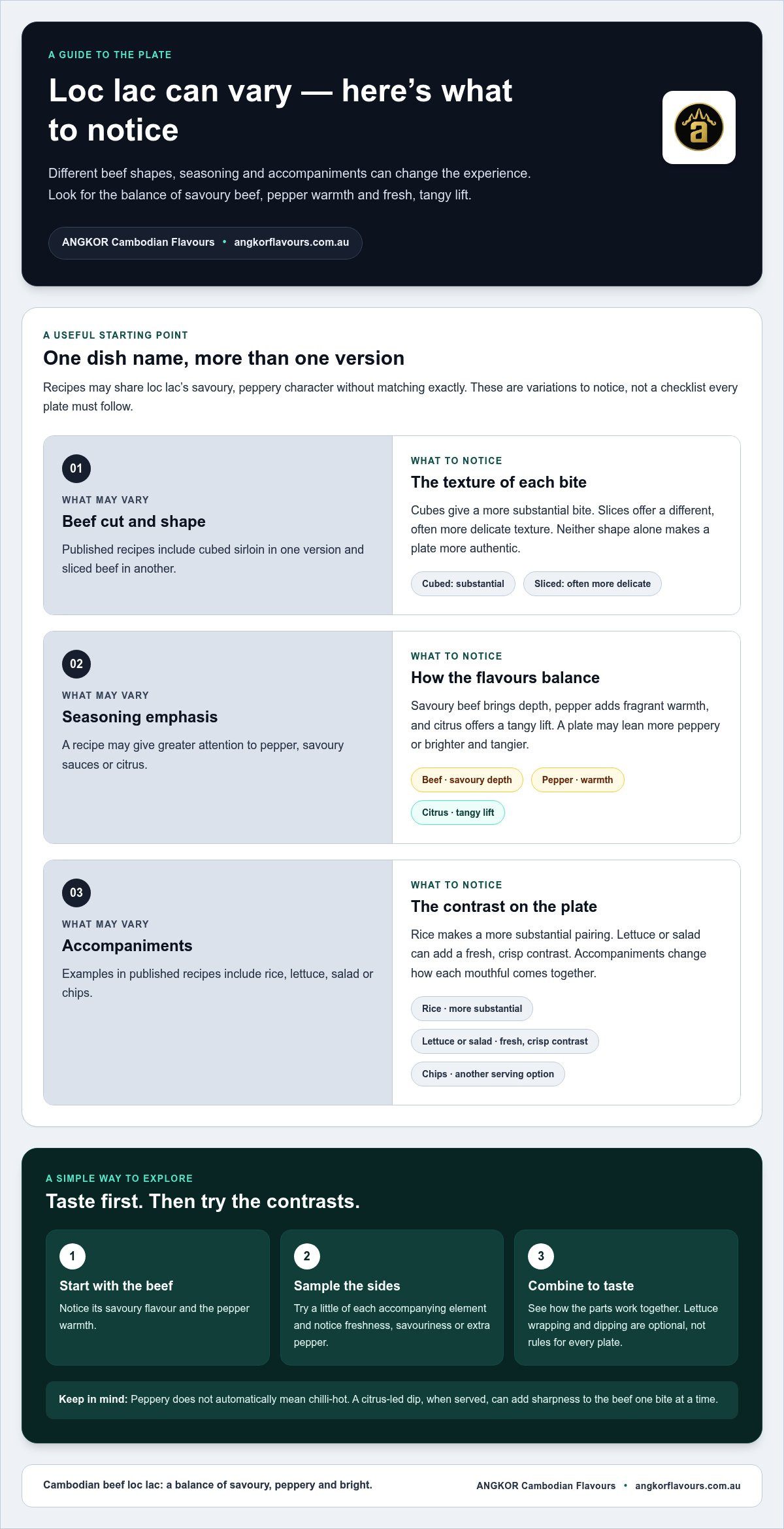
A recipe gives you one cook’s version, not a template every restaurant must follow. Two plates of Cambodian beef loc lac may share a savoury, peppery character yet differ in beef shape, seasoning and accompaniments. The examples below show some of the ways recipes can vary.
| What may vary | Examples in published recipes | What to notice |
|---|---|---|
| Beef cut and shape | Cubed sirloin in one recipe; sliced beef in another | Cubes give a more substantial bite; slices offer a different, often more delicate texture. |
| Seasoning emphasis | Recipes may give greater attention to pepper, savoury sauces or citrus | Notice whether the beef’s savouriness, pepper warmth and tang feel in balance. |
| Accompaniments | Examples include rice, lettuce, salad or chips | These change the contrast, freshness and way each mouthful comes together. |
Beef cuts and serving styles: what might vary?
Some recipes use cubed beef, while others slice it. Neither shape alone makes a plate more authentic. A cube makes the texture of the beef more noticeable; a slice may be easier to combine with rice or salad in a single bite. Serving style matters, too. Rice makes a more substantial pairing, while lettuce or salad can add a fresh, crisp contrast. These are possibilities, not a fixed serving rule.
How to judge whether the flavours feel balanced
Try the beef on its own first, then taste it with an accompaniment. Is the seasoning savoury without masking the meat? Does pepper register as warmth rather than overwhelm? If citrus is present, does its tang brighten the bite? This simple sequence works when tasting a restaurant dish or comparing recipes, and helps you notice the whole plate instead of judging it by one ingredient.
Loc lac can vary, so assess the whole flavour balance rather than treating one ingredient as the test. A particular cut, sauce or side may be familiar from a recipe, but none alone proves that a version is definitive. Consider how the elements work together: substantial or tender beef, seasoning that suits it, and accompaniments that bring contrast. You may prefer a brighter, fresher bite or a deeper savoury feel. Both can be enjoyable, and those differences make comparing plates worthwhile.
How to Order and Enjoy Cambodian Beef Loc Lac for the First Time
Trying Cambodian beef loc lac for the first time doesn’t call for special knowledge or dining rules. Take a moment with the plate, follow your appetite and enjoy it at your own pace. The beef and its accompaniments can be explored together, but there’s no single required way to eat them.
A simple first-bite guide to loc lac
Start with the aroma, then taste a piece of beef on its own. This lets you notice its texture and seasoning before other flavours join in. Next, try a bite with any citrus, salad or other accompaniments on your plate. Notice how each changes the taste: one may add freshness, another tang or crunch.
If your version includes lettuce, wrap a little beef and salad together for a crisp, combined bite. If there’s a dipping sauce, try a small amount and see how it shifts the balance. Both are optional ways to explore a plate served with those elements. There’s no need to assemble every mouthful the same way.
What can you pair with a Cambodian meal?
Loc lac recipes show a range of accompaniments, including rice, lettuce and salad. Rice can make a meal feel more substantial; fresh elements offer a lighter contrast. Start with what’s on your table, then decide whether you prefer the beef on its own or combined with what’s alongside it.
At a Cambodian restaurant in West Melbourne, settle in and take your time. You don’t need to know Khmer food etiquette beforehand or get every bite “right”. A first taste on its own, followed by a taste with the accompaniments, is enough to help you find your preference. If you’re sharing dishes, enjoy each one before returning to the loc lac.
Curious to explore another Khmer dish as part of your meal? Fish Amok Melbourne: Taste Cambodia at ANGKOR offers a next step into Cambodian flavours. ANGKOR Cambodian Flavours serves Beef Loc Lac as part of its dine-in Khmer cuisine in West Melbourne. The restaurant’s welcome is inspired by Chef Neri’s Cambodian family heritage. Enjoy Beef Loc Lac at ANGKOR and discover the dish at the table, one bite at a time.
Enjoy Cambodian Beef Loc Lac at ANGKOR in West Melbourne
Reading about a dish can help you know what to expect; tasting it brings the flavours together. At ANGKOR Cambodian Flavours, an independently operated Cambodian restaurant in West Melbourne, Beef Loc Lac is part of the dine-in Khmer menu. Its savoury, peppery character and bright citrus notes make it an inviting introduction to Cambodian food, whether the dish is familiar or completely new to you.
Find ANGKOR at 389 Spencer Street, West Melbourne. You don’t need to arrive knowing Khmer food traditions or having a perfect way to order. Come curious, take your time with the menu and enjoy the experience at your own pace. A new dish name is an invitation to discover something different.
A local setting for discovering Khmer cuisine
ANGKOR is shaped by the Cambodian family heritage of Chef Neri, who independently owns and operates the restaurant. That connection gives the meal a personal context, while the welcome remains easy and unpretentious. Settle in, notice what draws your interest and take time to savour the food around the table.
For a first visit, Beef Loc Lac is a way to experience the range of flavours associated with Khmer dining without needing to know every dish beforehand. The name may be unfamiliar, but the pleasure is immediate: savoury beef, peppery warmth and a bright note that helps bring the flavours into balance. Let the plate guide you and enjoy each part as it comes.
Make loc lac part of a Cambodian dining experience
Beef Loc Lac is one way to explore ANGKOR’s Khmer menu, alongside other Cambodian dishes with their own tastes and textures. You might make a meal of a single favourite or share your attention across dishes. There’s no need to treat a first visit as a test. Start with what appeals, then let curiosity lead you to something new another time.
ANGKOR’s menu reflects Chef Neri’s Cambodian family heritage, bringing a personal connection to the food and culture. You don’t need to know a dish’s full story before enjoying it. A thoughtful first taste can be enough to begin forming your own impression of Cambodian cuisine.
Ready to try cambodian beef loc lac in West Melbourne? Visit ANGKOR Cambodian Flavours for a dine-in meal. Take a seat, follow your appetite and enjoy the dish around a welcoming Khmer table.
Let Your Next Cambodian Meal Begin with Curiosity
A first taste can be more than a new dish on the table. It can be a chance to follow what you enjoy, discover new flavours and make room for another favourite. You don’t need to know every Khmer dish before choosing what sounds inviting. Let curiosity do the work.
That’s part of the pleasure of cambodian beef loc lac. Every diner brings a different palate to the meal, and the way you enjoy it is your own. Perhaps you’ll notice the savoury depth first, or the pepper’s warmth and citrus brightness. Take time to enjoy the moment, then see what else on the table catches your interest.
At ANGKOR, Chef Neri’s cooking draws inspiration from her Cambodian family heritage, bringing personal meaning to a shared meal. Make your next West Melbourne dining outing an opportunity to explore those flavours. Enjoy Cambodian Beef Loc Lac at ANGKOR in West Melbourne. Pull up a seat and savour a new favourite.
Frequently Asked Questions
What is Cambodian beef loc lac?
Cambodian beef loc lac is a Khmer beef dish made in varied recipes and restaurant styles. Its name may also be written as “lok lak”, so you might see either spelling on a menu or in a recipe. Think of it as a dish with beef at its centre and seasonings and accompaniments that can differ between cooks, rather than expecting one exact arrangement.
Is Cambodian beef loc lac spicy?
It can be peppery without being intensely chilli-hot. Pepper and chilli bring different kinds of heat, and a recipe may lean more towards one than the other. If you’re sensitive to spice, begin with a small bite before adding any dip or seasoning on the side. The warmth can vary by preparation, so one version won’t necessarily predict the next.
What does loc lac taste like?
Loc lac generally combines savoury beef with lively seasoning that may include pepper and citrus notes. The exact impression depends on the preparation: one plate might taste more deeply savoury, while another may seem brighter or more pepper-forward. If you’re deciding whether it suits you, consider whether you enjoy beef dishes with a fresh, tangy edge rather than a rich sauce alone.
How is Cambodian beef loc lac traditionally served?
There isn’t one presentation that every cook or restaurant follows. Recipes show beef served with options such as rice, salad or a dipping sauce, while restaurant plates can vary in their arrangement. Take a moment to see what comes with your serving, then decide how you’d like to combine it. The sides can shape the meal as much as the beef itself.
Can you eat loc lac with lettuce?
Yes. If lettuce is served with your version, use it to wrap beef and other accompaniments for a crisp, hand-held bite. You can also eat the lettuce separately or enjoy the beef without it. There’s no required etiquette or single correct method. Try a small wrap, then choose whichever way lets you enjoy the flavours and textures most.
What is the difference between loc lac and shaking beef?
Loc lac and Vietnamese shaking beef, or Bò lúc lắc, are related dishes with overlapping names and culinary associations, but the terms don’t guarantee the same recipe or presentation. “Lok Lak” is another spelling used in English-language references. Versions can vary in beef shape, seasoning and sides, so treat each plate as its own interpretation rather than assuming they’re identical.
Where can you try Cambodian beef loc lac in Melbourne?
You can try Beef Loc Lac at ANGKOR Cambodian Flavours, an independently operated Cambodian restaurant at 389 Spencer Street, West Melbourne. It’s served as part of the restaurant’s dine-in Khmer cuisine. Chef Neri’s cooking is inspired by her Cambodian family heritage. If you’re new to the dish, settle in and explore it as part of a meal at the table.


